









Investing Beyond Returns: A Mission‑Aligned Approach for Foundations & Endowments


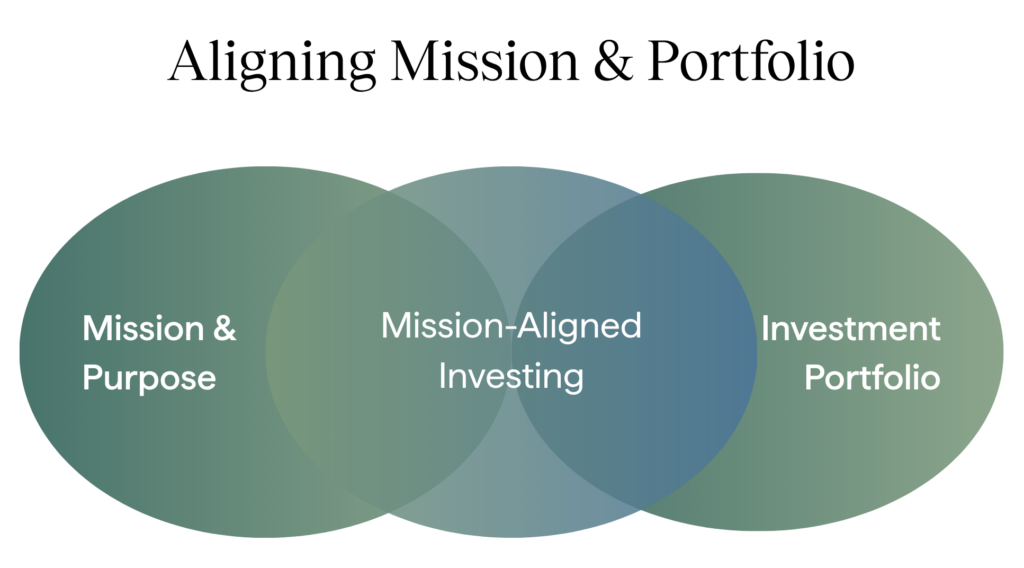
Foundations and endowments are created with purpose. Their capital exists not simply to grow, but to advance a mission, supporting communities, funding research, preserving institutions, and driving meaningful change. Yet, in many cases, the investment portfolio operates separately from that mission. Without intention, it can even work at cross purposes. Mission-aligned investing seeks to close that gap by ensuring that how capital is invested reflects its purpose, bringing coherence among purpose, strategy, and long-term sustainability.
At 1919, this approach is not new. Responsible investing has been part of our counsel for more than 50 years, grounded in a simple principle: understanding what matters most before building any portfolio. We believe that effective investment counsel begins not with markets or models, but with listening and taking the time to understand an organization’s mission, priorities, and long-term objectives before translating those insights into an investment strategy.
Starting with What Matters Most
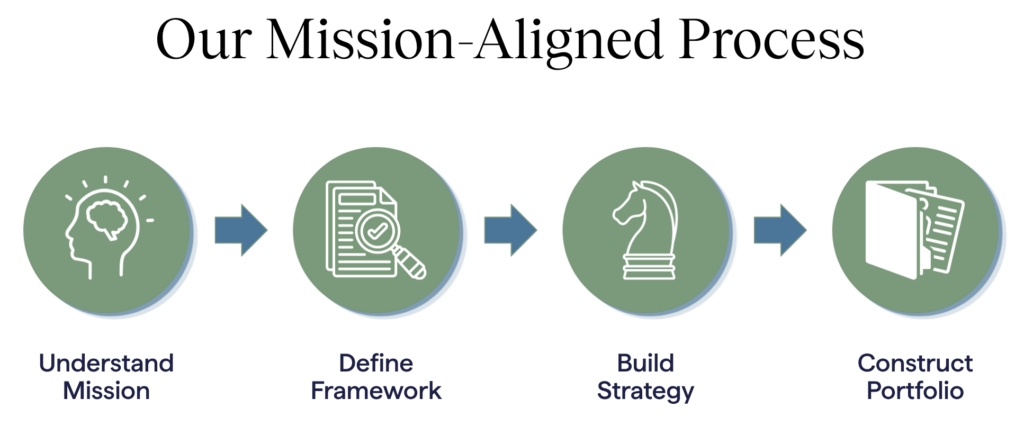
Every organization’s mission is distinct, and so is the role its capital must play in supporting that mission. That is why alignment begins with clarity. Before any investment decisions are made, we work closely with boards and committees to understand the organization’s core purpose, the issues that matter most to its work, and the financial realities that shape its decision-making. This includes funding needs, spending policies, and any structural constraints that must be considered.
This process reflects a broader belief embedded in our philosophy: counsel is built on understanding, not assumptions. From there, the mission is translated into a formal framework, often through an Investment Policy Statement, that integrates both financial objectives and mission-driven guidelines.
Translating Mission into Investment Strategy
Turning mission into an investment strategy requires thoughtful decision-making at the board and committee level. Organizations must determine which values the portfolio should actively support, which exposures may be inconsistent with their purpose, and how mission-related considerations fit within their fiduciary responsibilities. These are not abstract questions; they are practical decisions that shape how capital is allocated and how the portfolio behaves over time.
Importantly, these decisions are made within a disciplined investment framework designed to pursue competitive long-term returns, recognizing that mission alignment and financial performance are not mutually exclusive.
The answers will differ across institutions, but the discipline of defining them clearly is what enables alignment to be implemented effectively.
Building a Mission-Aligned Portfolio
A mission-aligned portfolio is not a standardized product. It is a reflection of the organization itself. For some, that may mean emphasizing environmental stewardship and focusing on issues such as climate change and natural resource preservation. For others, it may involve addressing social considerations such as human rights, labor standards, and community impact. Governance priorities may also play a central role, including transparency, accountability, and board composition.
These priorities can be expressed in different ways within the portfolio, whether through exclusions based on mission-inconsistent activities, ESG[1] integrations where values inform risk and opportunity assessment, thematic investments tied to issues the organization seeks to address, or impact-oriented allocations for measurable outcomes (for example, clean water, inclusive communities, etc.). The goal is to not necessarily apply every tool, but to determine the level of alignment that is appropriate for the organization’s mission and mandate.
What Alignment Looks Like in Practice
In practice, a mission-aligned portfolio should be a natural extension of the institution it serves. It may incorporate sector tilts that reflect environmental or social priorities, apply governance criteria that align with institutional values, or include investments designed to address specific societal challenges.
At 1919, we do not rely on generic ESG frameworks. Each portfolio is built from the ground up, designed to reflect the organization’s purpose rather than conform to a standardized model. This customized approach allows for greater precision and ensures that alignment is both meaningful and implementable.
Why It Matters for Foundations & Endowments
The benefits of alignment extend beyond philosophy. For foundations and endowments, aligning investment strategy with mission can strengthen credibility with donors, grantees, and the broader community. It creates consistency between how capital is invested and how it is deployed through grantmaking, reducing the risk of conflicting messages or unintended consequences.
It can also enhance engagement among board members and stakeholders, who increasingly expect alignment between values and capital allocation. Importantly, this alignment does not require sacrificing financial rigor. With a disciplined approach, organizations can pursue mission-related objectives while maintaining a focus on long-term performance and sustainability.
Key Considerations for Boards and Committees
Mission alignment raises important governance considerations. Investment committees must carefully evaluate the appropriate level of alignment, how certain constraints may affect diversification, and whether mission-related criteria influence the portfolio’s risk and return profile. These are not barriers to alignment, but essential elements of responsible oversight.
Clear policies, well-defined guidelines, and ongoing monitoring are critical to maintaining alignment with fiduciary responsibilities. Equally important is building consensus among stakeholders, as foundations and endowments often represent a range of perspectives that must be thoughtfully balanced.
Ongoing Stewardship and Oversight
Mission alignment is not a one-time decision, but an ongoing process. As organizations evolve, so do their priorities and the environments in which they operate. Our role is to support that evolution through thoughtful portfolio construction, ongoing reporting, and continuous dialogue.
We monitor alignment over time, provide transparency into exposures and outcomes, and make adjustments as needed to reflect changes in mission or market conditions. This long-term stewardship extends beyond portfolio construction to include active ownership practices, such as proxy voting and corporate engagement, that reinforce mission-driven values.
Real-World Applications
In practice, mission alignment can take many forms. An environmentally focused organization may emphasize low-carbon investments and resource-efficient solutions. A social mission institution may allocate capital toward community-oriented initiatives. Faith-based organizations may incorporate values-driven guidelines rooted in their beliefs, while others may prioritize governance factors such as board diversity and corporate accountability.
Each approach is different, but all are grounded in the same principle: aligning capital with purpose.
Aligning Purpose and Capital for Lasting Impact
For foundations and endowments, the investment portfolio is more than a financial tool; it is an extension of the organization’s identity. When thoughtfully constructed, it reinforces the mission rather than operating alongside it. It strengthens credibility, supports long-term sustainability, and creates a clearer connection between purpose and action.
At 1919, our role is to listen, to understand, and to translate that purpose into an investment strategy that is both disciplined and deeply aligned with what matters most. Because when purpose and capital move in the same direction, the impact can be lasting.
FOOTNOTES
[1] ESG (Environmental, Social, and Governance) is a framework used by investors to assess a company’s overall sustainability, ethical impact, and risk management beyond traditional financial metrics.
About 1919 Investment Counsel
1919 Investment Counsel is a registered investment advisor. Its mission for more than 100 years has been to provide investment counsel and insight that helps families, individuals, and institutions achieve their financial goals. The firm is headquartered in Baltimore and has offices across the country in Birmingham, Cincinnati, New York, Philadelphia, San Francisco and Vero Beach. 1919 Investment Counsel seeks to consistently deliver an extraordinary client experience through its independent thinking, expertise and personalized service. To learn more, please visit our website at 1919ic.com.
Disclosures
The information provided here is for general informational purposes only and should not be considered an individualized recommendation or personalized investment advice. No part of this material may be reproduced in any form, or referred to in any other publication, without the express written permission of 1919 Investment Counsel, LLC (“1919”). This material contains statements of opinion and belief. Any views expressed herein are those of 1919 as of the date indicated, are based on information available to 1919 as of such date, and are subject to change, without notice, based on market and other conditions. There is no guarantee that the trends discussed herein will continue, or that forward-looking statements and forecasts will materialize. This material has not been reviewed or endorsed by regulatory agencies. Third party information contained herein has been obtained from sources believed to be reliable, but not guaranteed.
There is no guarantee that employees named herein will remain employed by 1919 for the duration of any investment advisory services agreement.
1919 Investment Counsel, LLC is a registered investment advisor with the U.S. Securities and Exchange Commission. 1919 Investment Counsel, LLC, a subsidiary of Stifel Financial Corp., is a trademark in the United States. 1919 Investment Counsel, LLC, One South Street, Suite 2500, Baltimore, MD 21202. ©2026, 1919 Investment Counsel, LLC. MM-00002415
Published: May 2026