








Investing Through Transformation: Navigating Markets, Technology, and Geopolitics
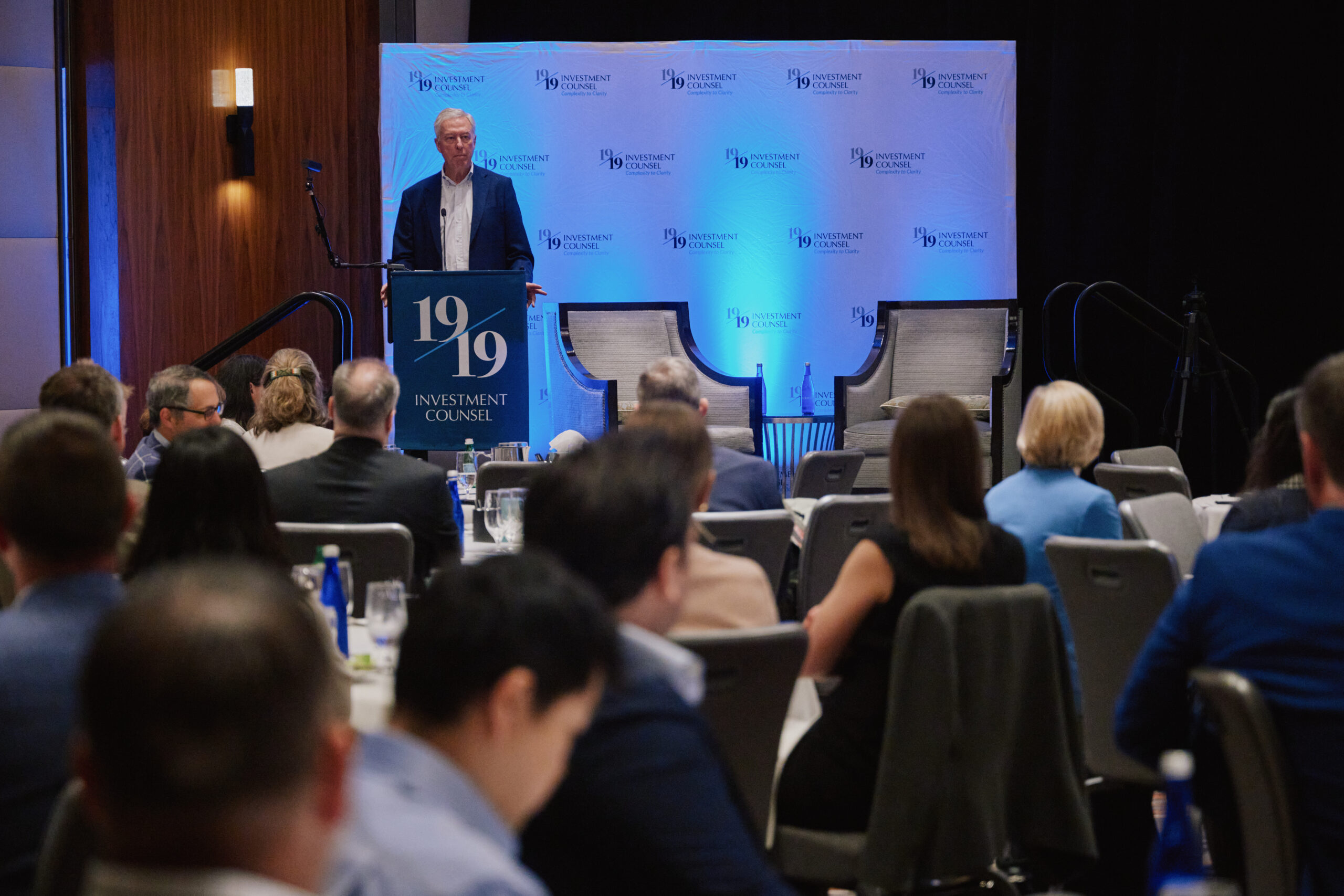
In May, our team gathered for our annual Intellectual Capital Conference (“ICC”), which brings together the firm’s advisors and external experts to collaborate and discuss global market trends, geopolitical volatility, and investment strategies. The goal of the ICC is always the same: to challenge our perspectives, broaden our thinking, and anticipate what’s around the corner. It’s part of how we strive to be smarter, more thoughtful partners to our clients, providing sound investment counsel, clarity, and confidence in uncertain times.
Artificial Intelligence Moves From Theory to Practice
A central focus of this year’s conference was the continued growth and practical application of Generative Artificial Intelligence (“Gen AI”). Dr. Lars Friedrich, Global Head of Artificial Intelligence at Stifel, outlined the opportunities and challenges of implementing Gen AI in enterprise settings, particularly within banking and finance. Minghong Xu, PhD, of the Johns Hopkins Carey Business School, provided historical context, tracing the evolution of generative AI and highlighting its limitations relative to human reasoning.
Internally, 1919’s Dr. Tom Krowgowski, CFA, demonstrated how these tools are already shaping workflows across our firm, from prompt engineering to experimentation with real-world use cases, underscoring that AI is no longer theoretical, but embedded in how work is being done today.
What goes into the infrastructure that makes Gen AI possible is a layered and complicated subject, one that has helped push markets upward despite growing macro concerns. Thomas Carroll, CFA, Vice President – Portfolio Strategy at Stifel, described an economy that appears strong on the surface but increasingly divided beneath. While earnings growth remains solid, supported in part by AI-driven investment, valuation pressures and inflation dynamics introduce a more nuanced outlook. Carroll also outlined reasons why caution is still warranted in the current environment including signals that the economy is running hot.
Kent Chan, Equity Investment Director at Capital Group, offered his perspective on why markets have remained so elevated. Chan discussed the AI arms race and the investment opportunity in international and emerging markets. While much of the focus of the AI trade has been on U.S. and Chinese models and infrastructure, he also pointed to opportunities elsewhere, including raw materials producers in Latin America, offering a broader perspective on what is required to support these buildouts.
The Human Element of Advice
While technological advancement continues to reshape industries, it does not replace the human side of decision-making. Jonathan Habbershon, VP, Senior Business Consultant at Fidelity, emphasized the importance of understanding clients beyond their financial profiles, encouraging advisors to focus on “share of life.” He highlighted how deeper engagement through better questions, empathy, and authentic connection can uncover the real motivations behind financial decisions.
Caitlin Rascelles, National Personal Lines Leader at Brown & Brown, added another dimension; expanding on the complexity of risk within high-net-worth households. This complexity includes evolving insurance markets that increasingly focus on nuanced exposures across property, liability, and personal security. She explained the importance of proactive risk management, while also underscoring the need to understand policy language in order to avoid potentially catastrophic outcomes. Together, these perspectives reinforced that effective advice begins with understanding, grounded in conversation, context, and trust.
Innovation and the Infrastructure of the Future
Innovation was further explored through emerging technologies and the systems supporting them. Andrew Samuel, Associate General Counsel at Coinbase, spoke about innovation in the cryptocurrency industry, including tokenization of assets and stablecoins. He explained how blockchain technology can mitigate many of the fees associated with traditional transactions, with the potential to meaningfully change how transactions are conducted.
Jason Aspiotis, Orbital Data Centers Pioneer – Space Industrialist and Technologist, shared his perspective on the importance of space-based computing infrastructure. He emphasized that orbital data centers are constrained less by physics than by economics, describing them as purpose-built satellites designed to maximize power generation and processing efficiency for a range of applications, including AI, defense, and secure data storage.
Jared Keller, Editorial Director and Digital Strategist, rounded out the discussion with a look at the advancements in defense technology, highlighting the growing role of laser-based systems as a lower-cost, scalable response to drone warfare, while noting that technical and operational challenges remain. Across these conversations, a common theme emerged: innovation is expanding into new domains, but its long-term impact will depend on both economic viability and practical implementation.
Foundational Industries Remain Essential
Alongside these forward-looking discussions, the conference also grounded itself in foundational sectors such as energy and life sciences. Arjun Murti, Partner at Veriten, LLC and a Senior Advisor at Warburg Pincus, provided insight into today’s energy landscape. He emphasized the continued importance of traditional energy sources, particularly oil and natural gas, arguing that current expectations around a rapid energy transition remain misaligned with global demand realities. In his view, alternative energy sources are complementary, particularly in areas where supporting infrastructure is well developed.
Dan Arias, Managing Director, Life Sciences & Diagnostics at Stifel, discussed innovation within diagnostics and life sciences. His remarks focused on advancements in early detection, precision medicine, and the potential integration of AI into research workflows.
Context Matters: Markets, Policy, and Long-Term Risks
The conference concluded with perspectives on institutional structures and political dynamics. Jeff Hooke, Former Senior Finance Lecturer at the Johns Hopkins Carey School of Business and a Director of Emerging Markets Partnership (a $5 billion private equity fund), examined the structure and performance of private markets. He argued that private equity returns have often fallen short of the industry’s marketing narrative, particularly once fees, valuation practices, and liquidity constraints are taken into account. Rather than dismissing the asset class outright, his remarks encouraged a more critical assessment of the gap between how private equity is presented and how it has often performed in practice.
Benjamin Ginsberg, the David Bernstein Professor of Political Science and Chair of the Center for Advanced Governmental Studies at Johns Hopkins University, delivered a candid assessment of the current political environment. Drawing on decades of experience in political strategy, he pointed to rising polarization, the growing use of “lawfare,” and broader partisan trends. Ginsberg also expressed concern about increasing hostility and a lack of civic education among the U.S. voter base, which he suggested creates ongoing risks. Together, these discussions reinforced the importance of context, particularly when evaluating long-term risks and opportunities.
Looking Ahead
What emerged from this year’s conversations is not just a clearer view of the landscape, but a stronger sense of how we can navigate it alongside our clients. By leaning into a broader network of expertise, we’re better equipped to connect ideas, anticipate change, and translate complexity into meaningful guidance. It’s a reflection of our approach at its core: listening first, thinking critically, and bringing together the right perspectives to help our clients move forward with clarity and confidence.
About 1919 Investment Counsel
1919 Investment Counsel is a registered investment advisor. Its mission for more than 100 years has been to provide investment counsel and insight that helps families, individuals, and institutions achieve their financial goals. The firm is headquartered in Baltimore and has offices across the country in Birmingham, Cincinnati, New York, Philadelphia, San Francisco and Vero Beach. 1919 Investment Counsel seeks to consistently deliver an extraordinary client experience through its independent thinking, expertise and personalized service. To learn more, please visit our website at 1919ic.com.
Disclosures
The information provided here is for general informational purposes only and should not be considered an individualized recommendation or personalized investment advice. No part of this material may be reproduced in any form, or referred to in any other publication, without the express written permission of 1919 Investment Counsel, LLC (“1919”). This material contains statements of opinion and belief. Any views expressed herein are those of 1919 as of the date indicated, are based on information available to 1919 as of such date, and are subject to change, without notice, based on market and other conditions. There is no guarantee that the trends discussed herein will continue, or that forward-looking statements and forecasts will materialize. This material has not been reviewed or endorsed by regulatory agencies. Third party information contained herein has been obtained from sources believed to be reliable, but not guaranteed.
There is no guarantee that employees named herein will remain employed by 1919 for the duration of any investment advisory services agreement.
1919 Investment Counsel, LLC is a registered investment advisor with the U.S. Securities and Exchange Commission. 1919 Investment Counsel, LLC, a subsidiary of Stifel Financial Corp., is a trademark in the United States. 1919 Investment Counsel, LLC, One South Street, Suite 2500, Baltimore, MD 21202. ©2026, 1919 Investment Counsel, LLC. MM-00002517